GUIDE: HOW TO TRANSITION YOUR german shepherd FROM KIBBLE TO A RAW food DIET
By Traci Needles, Founder and Owner of Nadelhaus German Shepherds
Published: October 27, 2024
So you’ve researched the benefits of a raw food diet for your German Shepherd and you’ve made the decision to switch to raw. Or you are curious about the process of switching to raw and what it entails. Use this guide to learn all about transitioning your dog from a kibble-based diet to a raw food diet.
And if you’re still researching a raw diet for your dog or German Shepherd, check out our beginners guide to raw food for dogs.
video: transitioning your dog from kibble to raw food
Watch our step-by-step guide one the process of switching your dog from kibble to raw food. Also learn about what to expect with your German Shepherd during the transition, what to look for in your dog’s behavior during this time, and monitoring stool changes and sizes.
Learn what to expect when transitioning your dog from kibble to a raw food diet, things to look for in the transition, and how to start the transition process step by step. Following these steps will help reduce abrupt changes in your dog's health, such as loose stool or diarrhea, during the transition process.
VIDEO TRANSCRIPT: TRANSITIONING YOUR german shepherd FROM KIBBLE TO A RAW FOOD DIET
-
Hi guys, Traci Needles, Nadelhaus German Shepherds. Today we're talking about Fido Fuels. We're trying to get some education to our clients and all of you out there looking for how do we start feeding raw. This will be a series on just educating people and helping you achieve the best health for your dogs.
-
First of all the typical amount of time that it takes to transition a healthy dog is about 10 days. You can actually transition for 30 days just depends on what your dog's temperament with their tummy is. If they have an upset tummy easily we're going to go extremely slow. We start with a very small amount of change. That small amount of change could be with your kibble. Keep all of that in there and just add a little bit of your raw food. You can add an egg, you can add some yogurt, you can add some goats milk, you can add many things. Anything that is real will help your dog be successful.
-
So a couple of things you might notice with your dog when you are transitioning from kibble to a raw food is somewhat of an eagerness to eat. The dogs are thrilled to be eating what they should have been eating all along. So you might have ravenous eating. You might have interesting breath. We hear that quite often our dog smells very different in its breath. That's normal um give the dog a chance to settle in with the new food and it will stop being so interesting and smell or different. Feeding your dog at the same time as you normally would: try to do that so the dog isn't confused even though you're changing your food you want to try and keep the same time frame that you're eating.
-
Another thing that's really important we don't think about this but it is so important to just feed once a day for any dog over a year [old]. Their bodies are not designed to eat two or three times a day, unless it's a puppy of course, but an older dog slow down the work the inflammation in the dog's body and it will make your dog healthier really quick.
-
Another thing to think about, another common thing to think about, is what is your dog stool doing at this time. It should be changing because your food intake the amount of processed food to healthy real meat and vegetables is totally different so you might see a dog have diarrhea for the first day or two and slowly taper back to a normal stool. You might see a dog that will have diarrhea for a week. When you have a dog with diarrhea my suggestion is to cut back the change stop with so much change. Go back to what you were normally eating like if it was eating two cups of kibble and a golf ball size of meat size I would make it a half size of a golf ball. Just eliminate the stress on the body but keep that new food present.
-
Something to think about is the stool changes. That's something that is really obvious when you change a dog from processed food to real food, to real raw food, is the size of our stools that we're seeing out of these dogs used to be almost the same amount of kibble that you were giving because that is waste. When you are feeding real food real meat you end up seeing all of that meat being absorbed into the dog's body and being used. So the stools will be extremely minimal compared to what you're normally used to see. You'll also see a change in the color the color is no longer the color of the kibble it's now either very dark or it sometimes can go white because they're absorbing so much of the bone.
-
So one question to think about is how long does it take to see results from a dog that has been eating kibble for five six seven eight years to now on a raw food diet. I would say you have to give that dog at least two months time to be able to really see the benefits of the nice shiny coat. The oral health that is huge. The no more itching and scratching. The um problems that we typically saw with kibble the reasons why we're switching is to they’re not having the ear infections and the itchy and scratchy coat. That's what you're going to see in 2 months time you can't see a big benefit out of that until you give them at least 6 to 8 weeks.
-
We're going to show you how to transition a dog from kibble to raw. Now there are some steps that you need to take so your tummy troubles don't start in and cause your dog to have too many problems. So when you're trying to transition you want to do a 75% kibble 25% raw. I'm going to say this dog is eating two cups I'm going to take 25% out of here, it's just kind of a guesstimate we're not going to make it too obvious, and we're going to give I would say a small golf ball size kibble err thing of meat in there and that's what it's going to look like for the first couple of days. As soon as you see good healthy normal stool then we can change that.
-
Okay so we're at the 50% mark. Your dog's poop is good, their attitude is good, they're loving the food. Now we're going to kind of cut back on our kibble so originally the dog was going to have two cups now we're at one cup. And our golf ball size meat has now become two golf ball sizes of meat.
-
Okay now your dog has been on Fido Fuels for a week or two and we are now at the 75% meat 25% kibble. If everything's good then we're going to go ahead and offer your dog 75% meat and that's about three golf ball sizes at least for a dog that's eating two cups of kibble.
-
Okay it's celebration time because now your dog should be 100% raw. If your poop's all good, dogs loving the dog food, you can actually say that you're now feeding 100% raw and don't worry about ever buying kibble again.
Why is it Important to Slowly Transition Your Dog's Diet from Kibble to Raw?
At Nadelhaus, we suggest gradually changing your dog’s diet to raw food instead of switching all at once. A slower transition helps your dog’s digestive system to adapt effectively to the new diet and will minimizes the risk of your dog having an upset tummy and diarrhea. By taking the time to transition slowly, you support your dog’s health and comfort throughout the process.
Signs of a Smooth Transition vs. Digestive Issues
When transitioning your dog from kibble to a raw diet, it's common to observe changes in their stool. You may notice firmer, smaller stools as their digestive system adapts to the new food. However, diarrhea can occur, especially during the initial stages of the transition. If your dog experiences diarrhea, it is essential to slow down the transition process by reducing the amount of raw food being introduced. You might return to a previous feeding ratio—if your dog was eating two cups of kibble with a golf ball-sized amount of raw, consider reducing it to half that size. Additionally, integrating probiotics can help support their gut health. Remember, stool changes are significant indicators of how well your dog is adjusting to their new diet.
Addressing Common Challenges
It’s uncommon for a dog to be reluctant to accept raw food, but sometimes it does happen. This is why it is important to start with a small amount of raw food mixed with the dog’s existing kibble diet and to slowly increase the amount over time. If your dog is still resistant, consider adding a splash of bone broth, goat milk, or a sprinkle of their favorite treat can also stimulate interest. If all else fails, consider transitioning with Fido Fuels Freeze-Dried Raw Food which is a bit closer in consistency and texture to kibble. With patience and watchfulness, you can make the healthy transition to raw for your furry friend.

how much raw food should i feed my german shepherd?
Aim to feed your dog a daily amount of raw food equally around 2-4% of the dog’s body weight. When transitioning, feed raw portions at the same times you would normally feed your dog its kibble. Larger dogs may need closer to 4% and smaller dogs may need less.
A 80 pound dog should eat between 1.5 to 3.2 pounds per day, or 11 to 24 pounds per week
A 60 pound dog should eat between 1.2 to 2.4 pounds per day, or 8 to 18 pounds per week
A 40 pound dog should eat between 0.8 to 1.6 pounds per day, or 5.5 to 12 pounds per week
A 25 pound dog should eat between 0.5 to 1 pounds per day, or 3.5 to 8 pounds per week
A 10 pound dog should eat between 0.2 to 0.4 pounds per day, or 1.5 to 4 pounds per week
Keep in mind that these are general guidelines and individual food needs can vary. Monitor your pet closely and adjust the food quantity as necessary to maintain a healthy weight.
RAW DOG FOOD DAILY PORTION SIZES BY DOG WEIGHT

WHY DID NADELHAUS SWITCH EXCLUSIVELY TO RAW FOOD FOR OUR GERMAN SHEPHERDS?
Traci Needles, owner of Nadelhaus German Shepherds, shares a personal story on why she was motivated to research and try raw food with her dogs. She now exclusively feeds her German Shepherds and puppies Fido Fuels raw food.
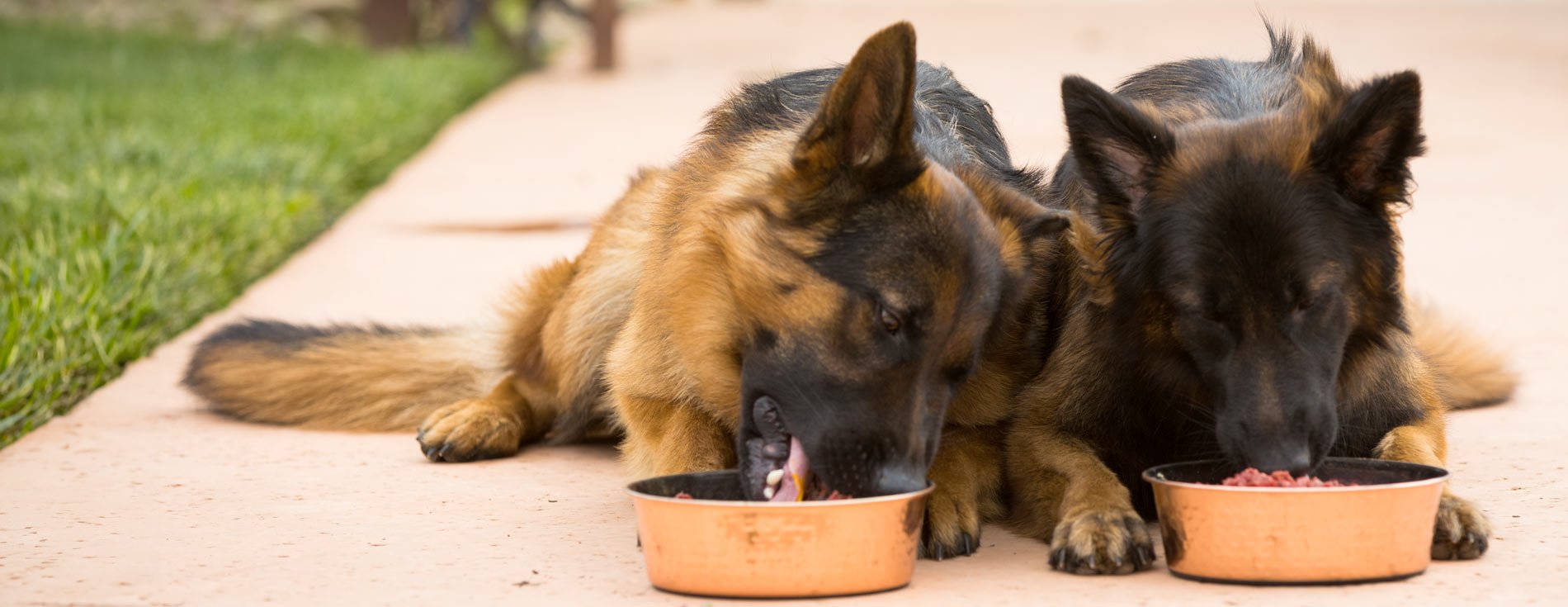
NADELHAUS IS AN OFFICIAL RESELLER OF FIDO FUELS RAW DOG FOOD
Read our beginners guide to raw dog food and see how easy the switch from kibble to raw food can be!
Foods that are dangerous for german shepherds
Whether you’re feeding your German Shepherd raw or kibble, you should always avoid the following foods as they are dangerous for your pet:
Onions, garlic, and chives
Grapes and raisins
Chocolate or coffee
Avocado
Citrus
Apple seeds or the pits to any fruit
Xylitol (artificial sweetener that is toxic to pets)
Macadamia nuts and walnuts

ABOUT THE AUTHOR
Traci Needles is the founder and owner of Nadelhaus German Shepherds™. Traci has been breeding German Shepherds since 1996. With nearly 30 years of experience with German Shepherds, she has extensive knowledge about this incredible working dog breed. Her mission is to breed German Shepherd dogs that have the ability to obtain Schutzhund titles and the highest possible conformation ratings. The German Shepherds she breeds are from 100% German bloodlines and Nadelhaus is a member of the GSDCA-WDA and SV of Germany.
